Microsoft’s AEO & GEO Guide: How AI Search Is Reshaping Discovery, Trust, and Recommendation
How AI Search Is Reshaping Discovery, Trust, and Recommendation
Microsoft recently published a 16-page guide outlining how brands should adapt their content and data for AI-driven search and shopping. The guide introduces two concepts that extend traditional SEO into AI-mediated environments:
Answer / Agentic Engine Optimization (AEO)
Generative Engine Optimization (GEO)
The guide outlines three core strategies — technical foundations, content clarity, and trust signals — and explains how crawled data, product feeds, and live site data influence AI recommendations.
Microsoft summarizes the relationship clearly:
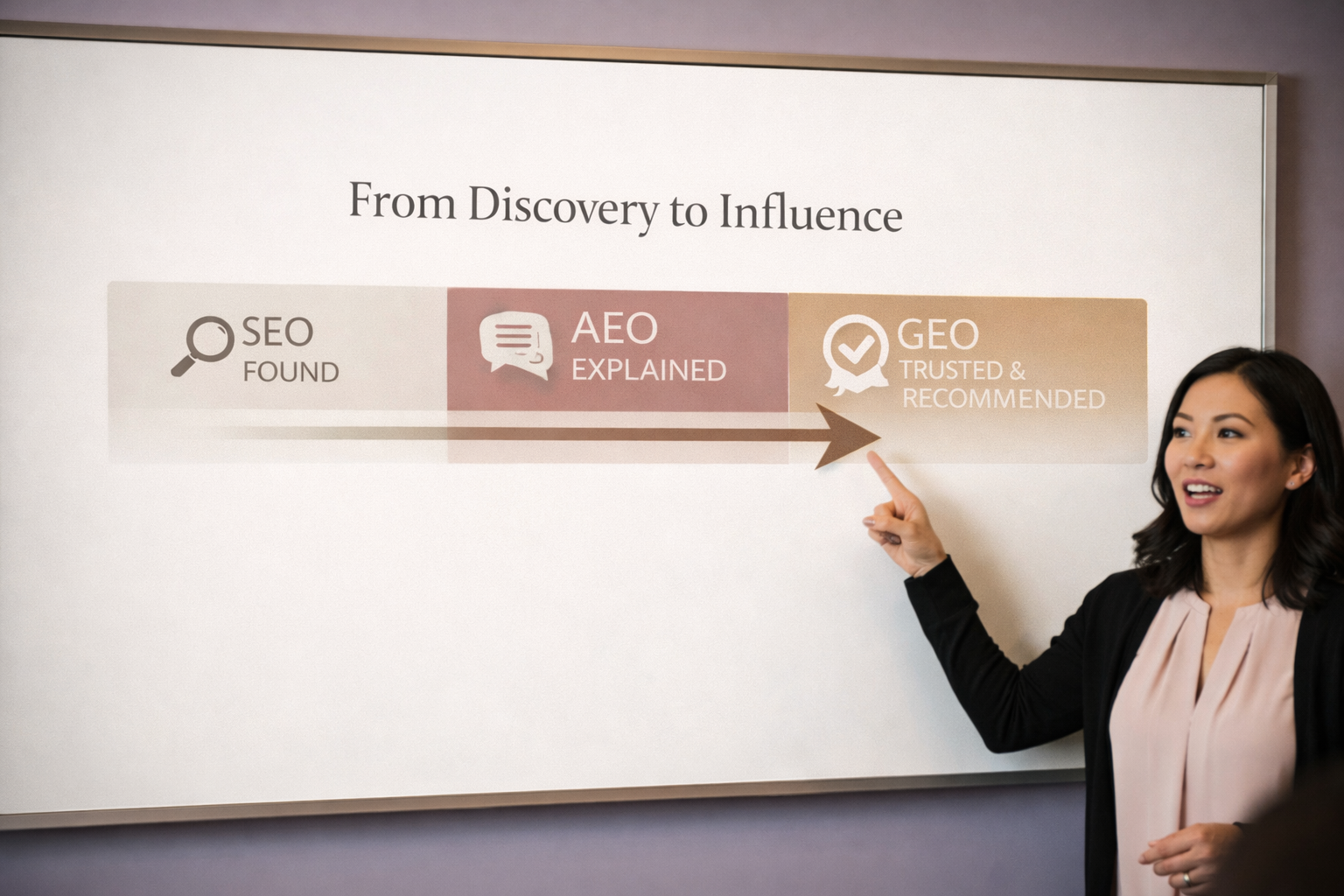
SEO helps the product get found
AEO helps the AI explain it clearly
GEO helps the AI trust it and recommend it
Together, these disciplines describe how visibility shifts when AI systems sit between brands and consumers.

Why Microsoft Introduced AEO and GEO
Microsoft’s guide is written for retailers and brands already feeling the pressure — and promise — of AI in commerce.
AI assistants, browsers, and agents are no longer just retrieving links. They are interpreting intent, summarizing trade-offs, comparing options, and in some cases completing purchases on behalf of users.
The challenge Microsoft highlights is not abstract:
How do brands ensure products are understood correctly by AI?
How do they keep brand narratives clear as discovery rules change?
How do they maintain credibility when AI systems decide what to surface?
The guide positions data quality, context, and credibility as the new currency of digital commerce.
Executive Summary: What This Shift Means for Organizations
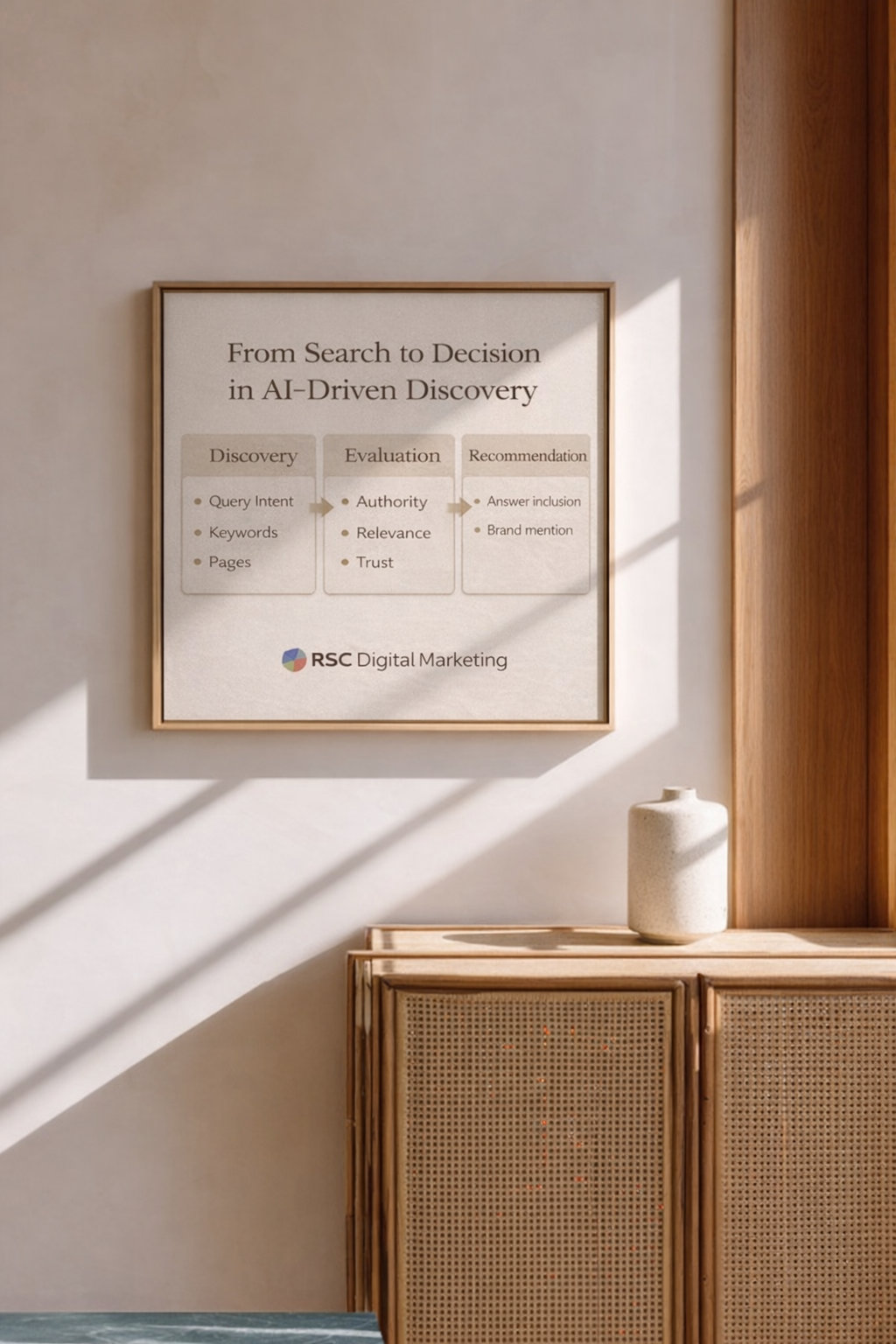
AI-driven shopping is changing how discovery and purchase journeys work. Traditional SEO emphasized rankings and clicks. In AI-powered ecosystems, visibility depends on whether AI systems can interpret, explain, and trust content.
Microsoft outlines implications across roles:
CMOs must ensure AI systems accurately represent brand differentiators
Growth and performance leaders must adapt to AI-led journeys
Digital and e-commerce teams must plan for AI-intermediated discovery metrics
CTOs must ensure platforms are AI-readable and AI-accessible
Data and analytics leaders must account for early-funnel research occurring inside AI conversations
Across all disciplines, Microsoft emphasizes that organizations investing in consistent, enriched data that LLMs can trust and act on are best positioned as shopping behaviour evolves.
How Products Surface in Conversational and Generative Ranking
Microsoft describes the AI shopping ecosystem as interconnected:
AI-enabled browsers interpret page content in real time and surface contextual guidance
AI assistants engage users conversationally to answer questions and support decisions
AI agents go further by navigating sites, comparing options, and completing purchases
These capabilities overlap. What matters is not the interface, but what data AI systems can access and trust.
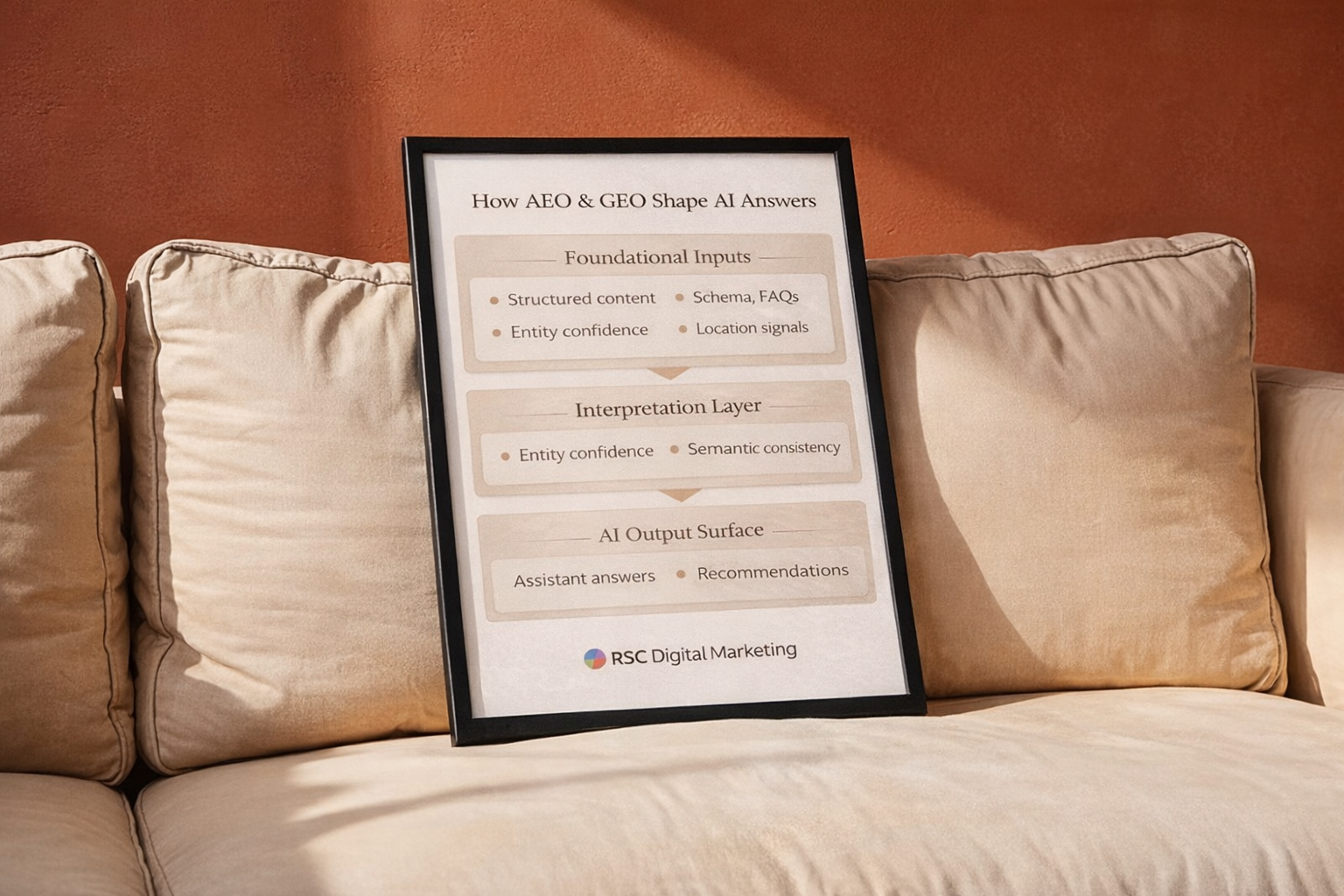
AI systems draw from:
Crawled website content
Product feeds and structured data
Inventory and pricing APIs
Reviews, images, and media
When these signals align, AI systems are more confident in explaining and recommending products.

From Discovery to Influence: SEO → AEO → GEO
Microsoft is explicit that SEO remains the foundation. Up-to-date feeds, crawlable pages, and structured content are still required.
What changes is how that foundation performs inside AI systems.
Brands are encouraged to treat their entire catalog and site architecture as content, ensuring every product detail, benefit, and price signal is:
Machine-readable
Current
Context-rich
This allows enriched, real-time data to surface more often in:
Conversational discovery
Curated AI results
Generative summaries such as “most durable” or “best value”
Microsoft illustrates the distinction:
SEO: “Waterproof rain jacket”
AEO: “Lightweight, packable waterproof rain jacket with ventilated seams and reflective piping”
GEO: “Best-rated waterproof jacket by Outdoor Magazine, 180-day returns, three-year warranty, 4.8-star rating”
SEO establishes discoverability.
AEO improves clarity.
GEO establishes credibility and recommendation readiness.
The Three Strategies Microsoft Highlights
1. Technical Foundations: Data Structure
AI systems require consistent structure across all touchpoints, including:
Schema and structured data
Real-time synchronization of feeds and content
Without this foundation, AI systems struggle to interpret information reliably.
2. Content Clarity: Design for Intent and Context
AI assistants interpret queries as intent, not keywords.
Microsoft emphasizes content that:
Answers real-world questions directly
Uses modular, citable content blocks
Includes multimodal signals (alt text, transcripts)
Maintains consistent structured data across desktop, mobile, and voice
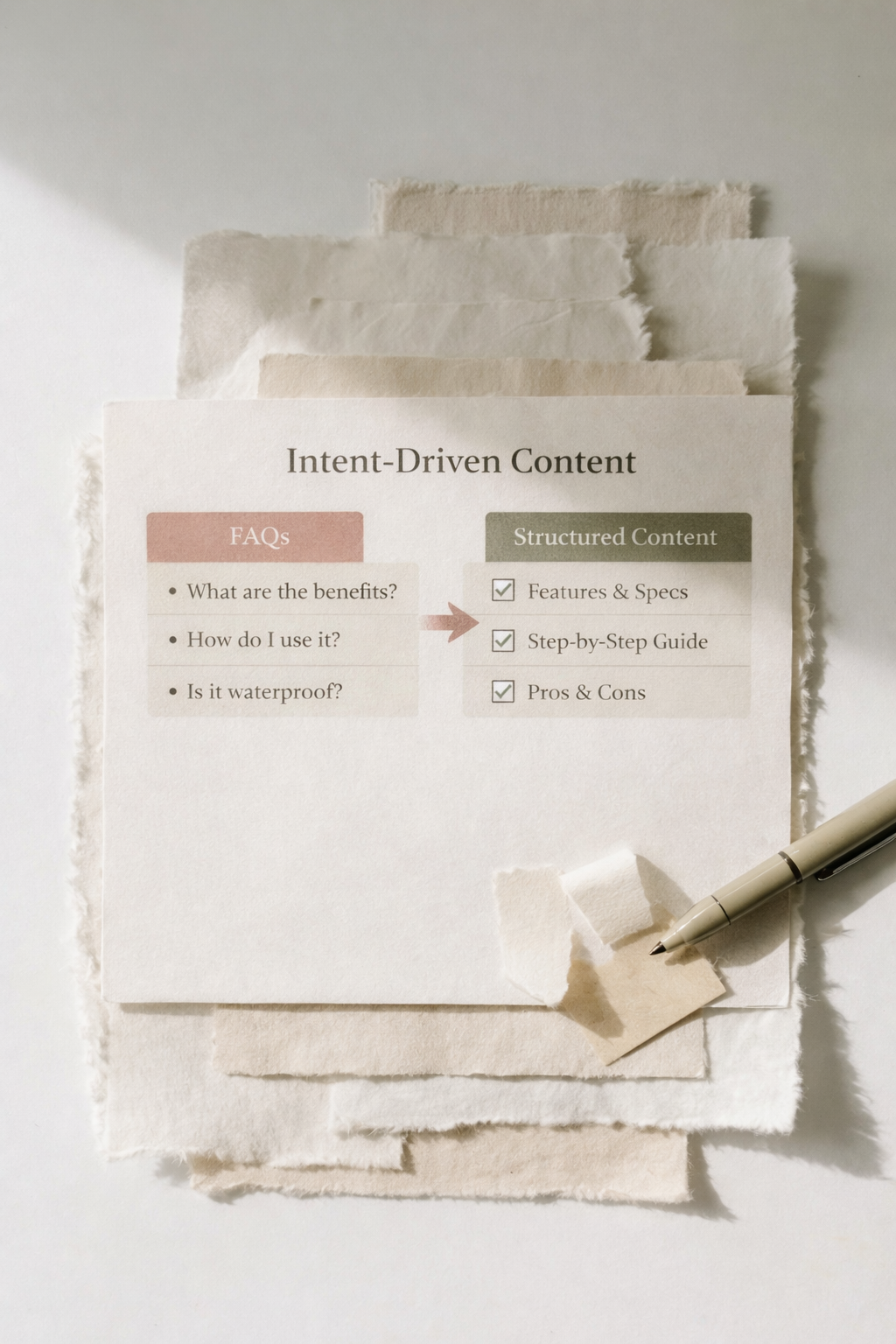
Structured FAQ content plays a key role because it mirrors how AI systems break down and respond to questions.
3. Trust Signals: Authority and Credibility
AI systems prioritize sources they can trust. Microsoft highlights:
Verified factual content aligned with E-E-A-T
Authentic reviews and AggregateRating schema
Visible review volume and sentiment
Additional credibility signals include:
Brand identifiers in structured data
Expert reviews and third-party coverage
Certifications, badges, and partnerships
Consistent brand voice and avoidance of exaggerated claims
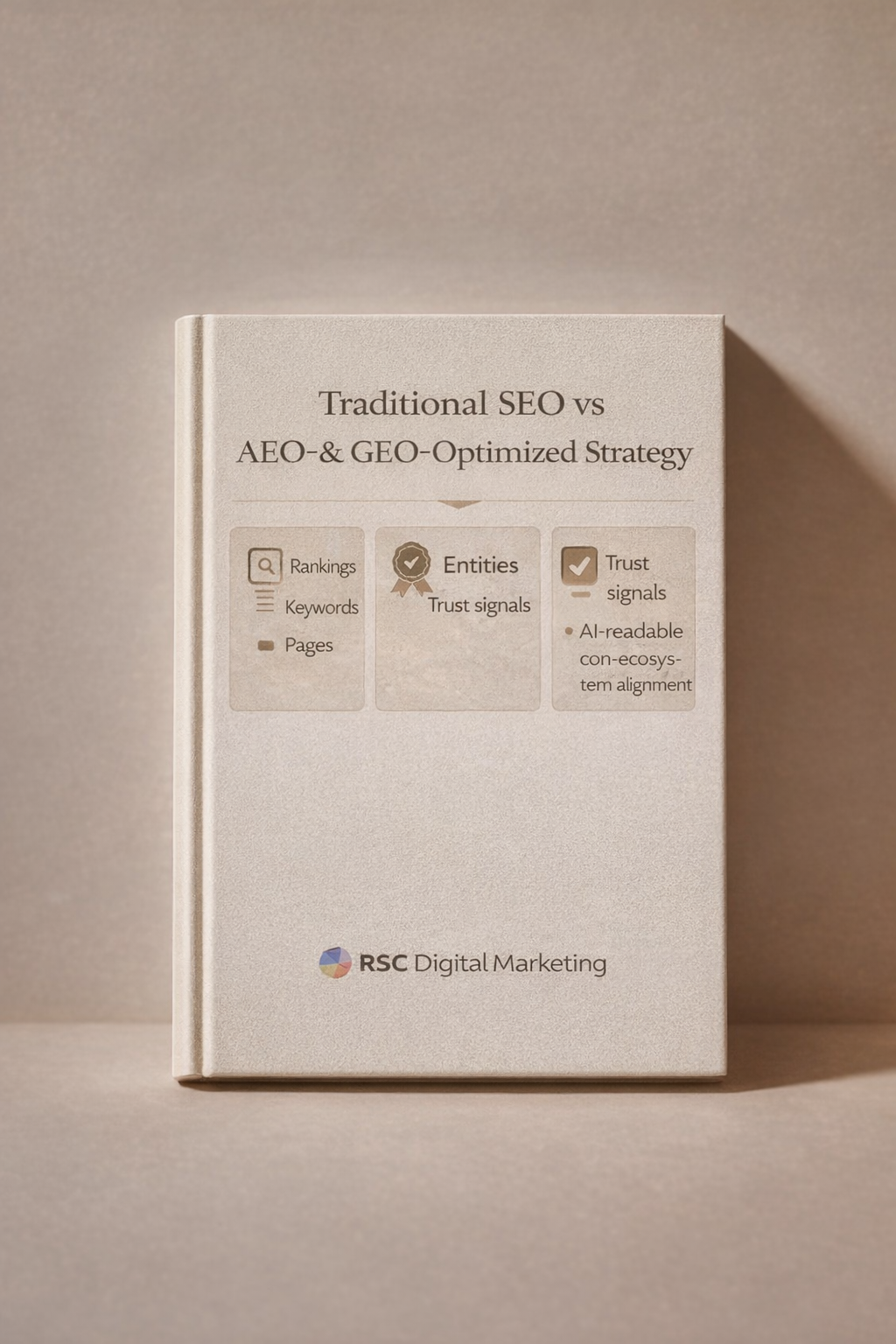
Key Takeaways From Microsoft’s Guide
Retailers already hold many of the signals that influence AI-driven ranking — particularly within Copilot and Bing — but those signals are often not fully surfaced.
By enriching product feeds and content assets with attribute-level and trust-based data, brands help AI systems understand:
What a product is
Why customers value it
When it performs best
This forms the basis of AI ranking readiness in conversational commerce.

What SEO Leaders Are Saying
SEO veteran Greg Boser has noted that SEO’s core has always been about understanding how humans use technology to gain knowledge, arguing that experience matters more than new terminology.
Microsoft has also stated that there is no secret formula for AI selection, reaffirming that success still begins with fresh, authoritative, structured, and semantically clear content.
Where AI search differs is that ranking increasingly happens at the content-fragment level, rather than entire pages — a shift echoed by Jesse Dwyer of Perplexity AI, who describes this as sub-document processing.
How RSC Digital Is Applying Microsoft’s AEO & GEO Framework
RSC Digital Marketing applies Microsoft’s AEO and GEO guidance to help clients pivot without abandoning SEO fundamentals.
SEO continues to establish lexical relevance and crawlability. AEO and GEO are applied at the interpretation layer — ensuring content is clearly understood, trusted, and surfaced by AI systems.
This includes optimizing:
Metadata, schema, and structured data
Image alt text and semantic markup
Technical positioning that allows content to surface in AI Overviews and conversational results
These signals are implemented cohesively across:
Websites and on-page SEO
Structured FAQ programs with schema
Google Business Profiles with geo- and service-specific language
Digital and print assets
Social and paid media
The same entities, language, and positioning are reiterated consistently so AI systems encounter one unified brand narrative.

Using AEO & GEO to Measure SEO Effectiveness
RSC Digital Marketing does not use AI to replace SEO.
AEO- and GEO-aligned analysis is used to measure how effectively SEO performs in AI-mediated environments.
This includes:
Query Fan-Out: Evaluating whether content supports AI reasoning paths
Competitive intelligence: Interpreting SERP movement, feature changes, and authority shifts
Content governance: Ensuring accuracy, trust, and consistency
Conversion analysis: Ensuring AI-driven visibility leads to clear actions
Executive reporting: Translating technical signals into business impact
The Bigger Point
AEO and GEO are not shortcuts.
They represent a shift in responsibility.
SEO still builds the foundation.
AEO and GEO determine how that foundation performs when AI systems decide what to explain and recommend.
We are no longer just optimizing pages.
We are designing systems AI can reason over, trust, and recommend.
