How to Track AI Visibility and Prompts in 2026

How to Track AI Visibility and Prompts in 2026
In March 2024, a nutrition brand spent $12,000 on expert-written guides, hired an SEO agency, and secured the #1 spot on Google for a high-intent query. Traffic barely moved. No spikes. No new leads.
The reason? ChatGPT was already answering the question. Perplexity was citing a Reddit thread. Google’s AI Overview skipped the brand entirely and linked to a competing startup instead.
Welcome to the era of AI-powered answers, where visibility is determined by whether your brand is included in the response. The internet is no longer structured around ten blue links. Generative AI tools, including ChatGPT, Gemini, Perplexity, and Bing, are changing how users search, learn, and make decisions by delivering answers directly instead of directing users to websites. If your brand is not cited within those answers, it is not part of the decision-making process.
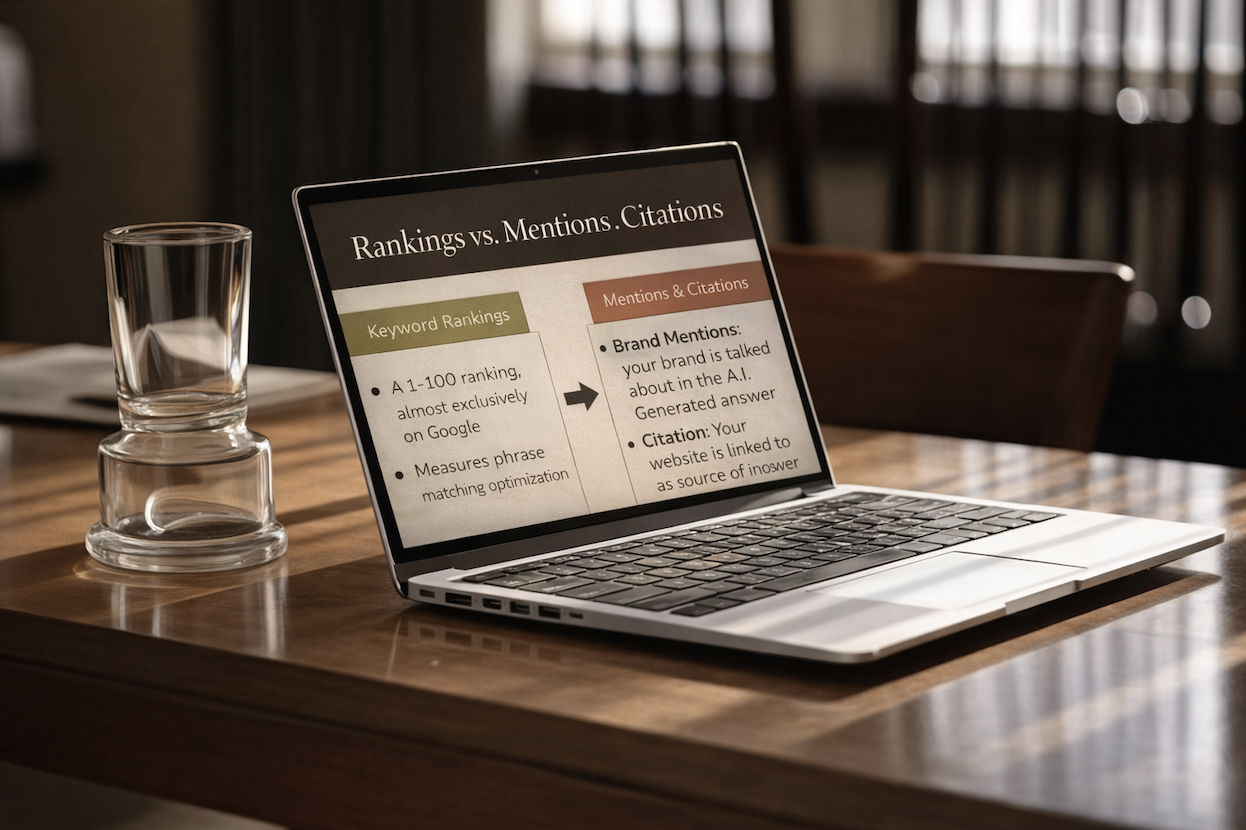
How Brands Get Cited in AI Answers and Why Most Don’t
Investopedia demonstrates how AI citation works at scale. In March 2024, it entered into a partnership with OpenAI, positioning its content as a trusted citation source within ChatGPT (Reuters) . Its definitions and financial explanations are now consistently surfaced across finance-related queries, reinforcing its authority across both AI-generated answers and traditional AI citation organic search.
Citation behaviour also continues to reflect traditional search visibility. Seer Interactive found that 87% of sources cited in Bing-integrated “SearchGPT” results originated from pages ranking within Bing’s top 20 results. Visibility still matters, but only when paired with content that is structured clearly, supported by domain authority, and easy for AI systems to extract and reuse.
Most brands are not cited because their content is not built for this environment. Information is buried instead of surfaced, answers are implied instead of stated, and authority is not reinforced across third-party platforms. AI systems prioritize sources that are clear, consistent, and repeatedly validated across the web.
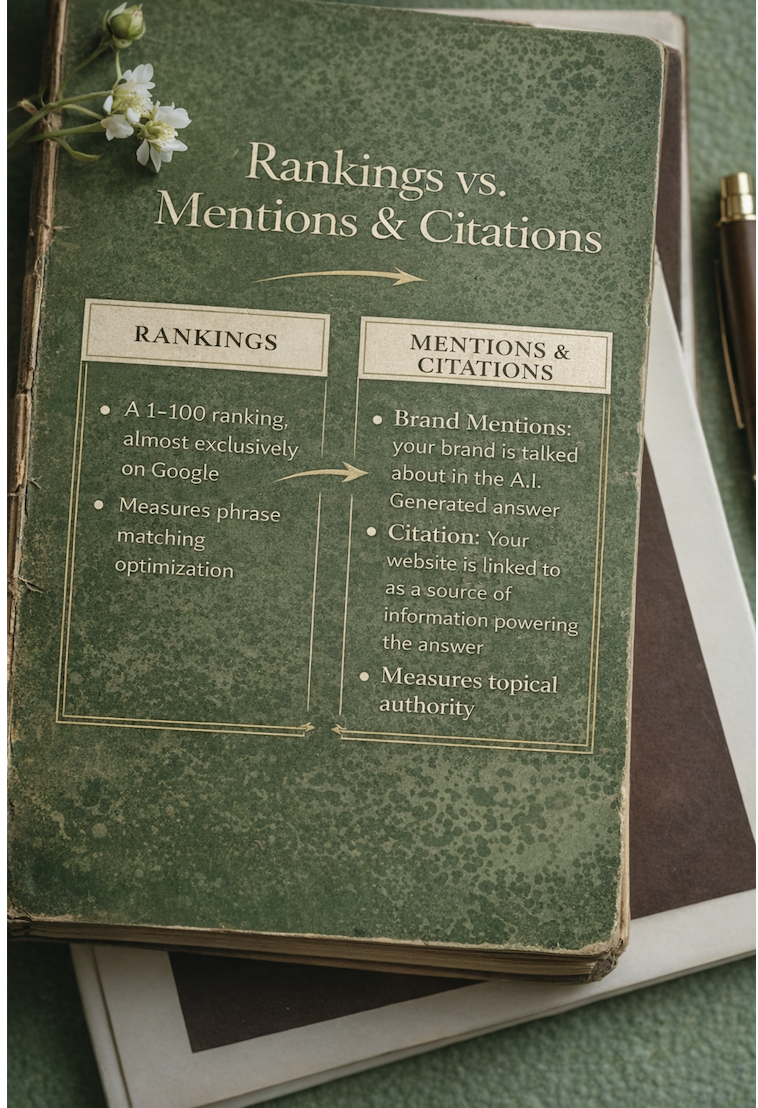
How to Achieve Brand Mentions Without Signing a Partnership with LLMs
Generative engines do not require partnerships to cite a brand, but they do require signals that align with how these systems evaluate trust and usability. Content must be structured so that answers are immediately identifiable, not buried within long-form narratives. Pages that surface clear, direct responses at the top are significantly more likely to be extracted and reused within AI-generated outputs.
Authority cannot exist in isolation. AI systems are trained to prioritize sources that are referenced across multiple environments, particularly third-party platforms such as media publications, forums, and widely trusted domains. Without external validation, even well-written content lacks the reinforcement required to be consistently cited.
Content must also demonstrate recency and relevance. AI systems continuously prioritize updated information, current statistics, and evolving perspectives. Pages that are not actively maintained lose visibility over time, regardless of their original performance.
Inclusion in AI-generated answers is determined by structure, validation, and consistency, not just optimization.

Search Is Changing Dramatically
Search behaviour has shifted from fragmented keyword inputs to fully articulated, conversational prompts. Users are no longer searching in shorthand. They are asking complete questions, providing context, and expecting synthesized answers that reflect their specific situation.
This shift is reflected in query length, with AI prompts averaging approximately 23 words compared to 3 to 4 words in traditional search. At the same time, zero-click behaviour has increased from 26% in 2022 to 60% in 2024, indicating that the majority of users now receive answers without navigating to external websites.
AI systems are also redefining how content is discovered. Crawlers are capable of indexing pages multiple layers deep, reducing dependence on traditional site architecture and increasing the importance of clarity and structure across all content, not just top-level pages.
These changes reflect a shift from search as navigation to search as resolution.
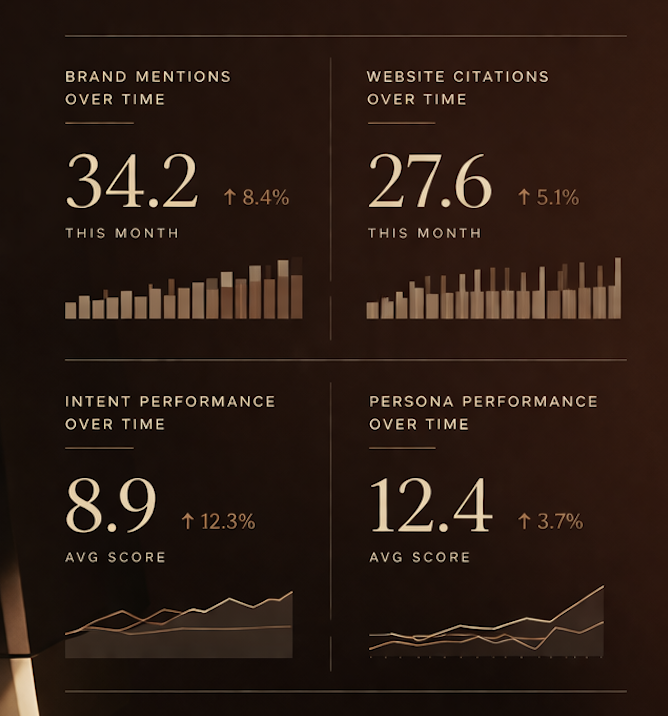
How Traditional Search Operates vs. AI Search and How Metrics Must Change
Traditional search is built on keyword alignment. Pages are ranked based on how closely they match a query, supported by technical optimization, backlinks, and domain authority. The output is a list of links, and performance is measured by how effectively those links generate traffic and conversions.
AI search removes that layer of decision-making. Instead of presenting options, it generates a response by interpreting intent, context, and relationships between topics. The user is no longer choosing between sources. The system is choosing for them.
This shift requires a redefinition of performance metrics. Rankings and traffic provide limited insight into visibility within AI-generated environments. Measurement must expand to include topics, prompts, mentions, and citations, which reflect whether a brand is present within the answer itself.
Without this adjustment, businesses continue optimizing for a model that no longer reflects how users access information.
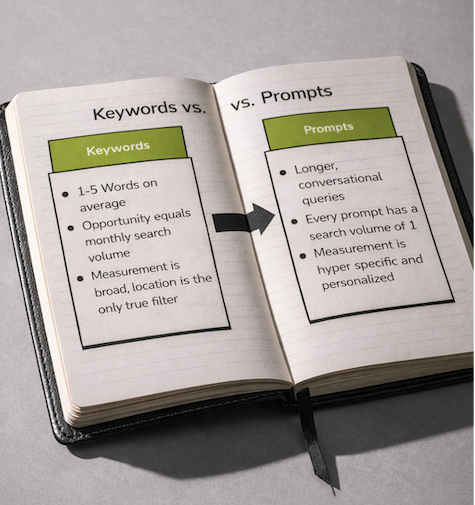
Keywords vs Prompts
Keyword research remains a useful reference point, but it does not reflect how AI systems process queries. In AI-driven search, each prompt is effectively unique. It carries context, nuance, and intent that cannot be reduced to a fixed keyword with measurable volume.
Traditional concepts such as search volume and exact-match targeting lose relevance in this environment. The same prompt can generate different outputs depending on phrasing, context, and user behaviour. Performance is not determined by matching language, but by demonstrating authority across a topic.
Synthetic prompt generation addresses this gap by creating datasets of realistic, conversational queries that mirror how users interact with AI systems. Instead of optimizing for a limited set of keywords, this approach captures the full range of ways a topic can be explored.
Each variation becomes a distinct entry point, allowing brands to build visibility across an entire topic rather than a narrow set of phrases.

How Businesses Can Integrate AI Into Content Strategy Without Compromising Brand Voice
The shift from keywords to topics changes the competitive landscape. Visibility is no longer tied to isolated terms, but to the depth and consistency of coverage across a subject.
Mentions and citations now function as primary indicators of performance. A mention reflects inclusion within an AI-generated response, while a citation indicates that a source has been explicitly referenced. Both outcomes are driven by topical authority and reinforced by consistency across multiple sources.
Integrating AI into content strategy requires a balance between structure and identity. Content must be clear enough for systems to interpret and extract, while maintaining a distinct point of view that differentiates the brand.
The objective is not to produce more content, but to produce content that can be repeatedly used within AI-generated answers.

Educate Internal Stakeholders on New Metrics
Search intent is no longer linear, and it is no longer tied to a single query. AI-driven search fragments intent across multiple prompts, personas, and stages of the customer journey, often within a single interaction. A user may move from discovery to evaluation to validation in one session without ever visiting a website.
This shift requires a fundamental change in how performance is understood internally. Reporting can no longer rely solely on rankings or traffic as indicators of success. It must account for how different personas interact with AI systems, how prompts evolve across the decision-making process, and how your brand appears within those responses.
Expanding reporting to include prompt length, journey stage mapping, and persona-based visibility provides a more accurate view of performance within AI-driven environments.
SEO vs AEO
SEO remains a foundational component of visibility, particularly because AI systems continue to rely on high-ranking, authoritative sources as inputs. However, ranking alone no longer guarantees inclusion within the answer layer where influence is now concentrated.
AEO introduces a second layer of optimization focused on whether content is selected, interpreted, and surfaced within AI-generated responses. While it is not the primary objective of the channel, it plays an increasing role in how visibility translates into influence.
As AI systems evolve toward agent-driven decision-making, including product recommendations and purchasing flows, inclusion within generated outputs will become a critical driver of performance.
Tracking must begin with personas rather than queries. Search is becoming more personalized with each model update, and visibility must be measured based on how a brand appears across different audiences, intents, and contexts.

Topics and Prompts
Effective tracking begins with defining topics at the product and service level. Each offering should be mapped to a core topic, supported by a network of related prompts that reflect how users explore that subject.
More specific topics produce more precise and actionable data, allowing for clearer insights into how visibility is distributed across different queries and contexts.
Branded topics must also be tracked across each AI engine. Unlike traditional search, brand positioning is not fixed. AI systems may reinterpret or reshape how a brand is described based on available inputs.
Prompt tracking should be treated as a dynamic system. AI can generate variations at scale, but these must be continuously refined to maintain relevance and accuracy.

AI Engine Best Practices in March 2026
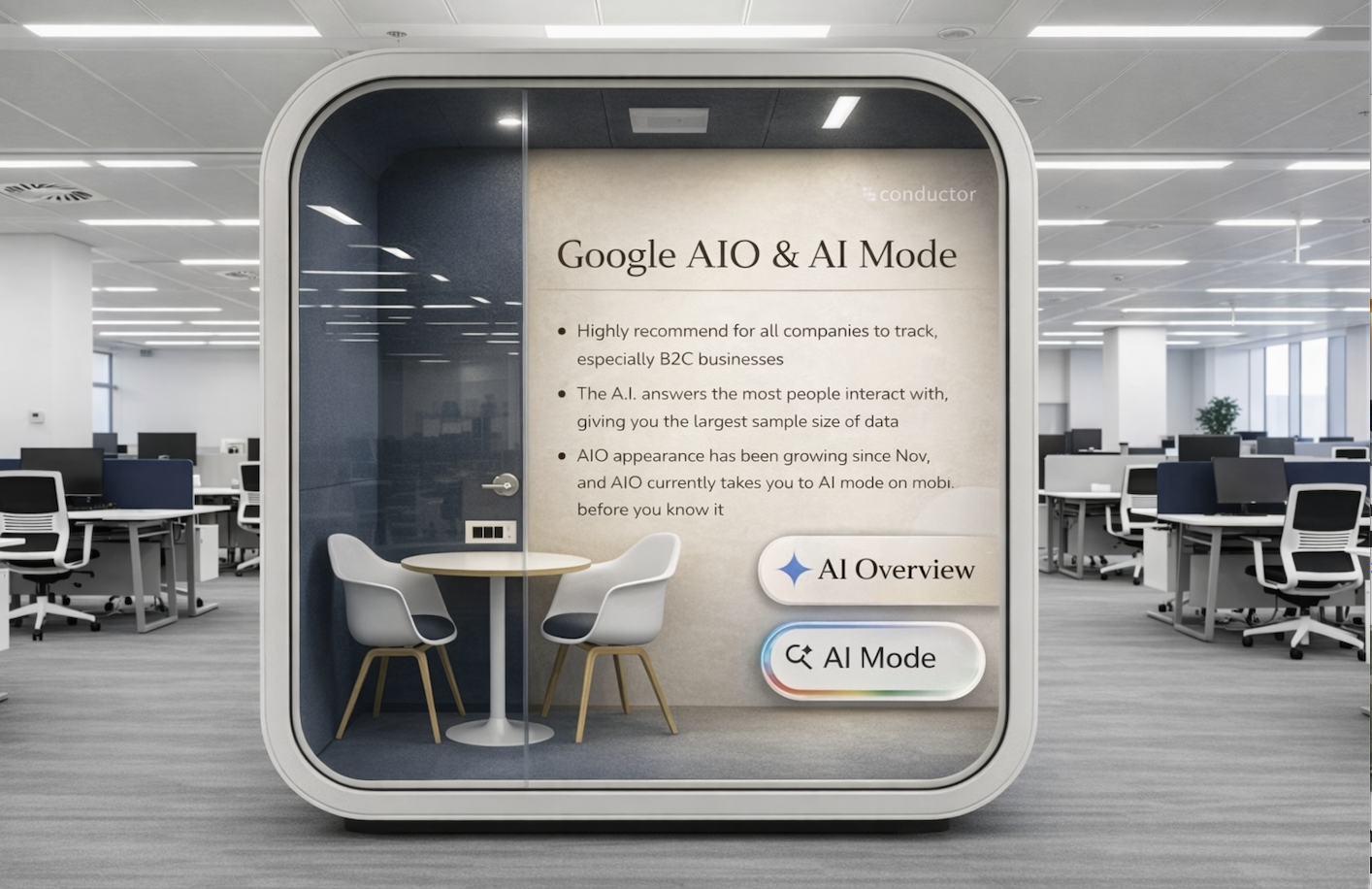
AI search adoption is scaling at a pace that traditional strategies cannot keep up with. ChatGPT alone processes approximately 1.39 billion queries per minute, Gemini handles over 1 billion queries daily, and Perplexity processes between 27,000 and 35,000 queries per minute, with projected growth continuing to accelerate.
Relying solely on keywords and traditional SEO targeting within this environment limits visibility. Each AI query represents a distinct opportunity to reach a user, shaped by context, intent, and personalization. An effective strategy is no longer based on ranking for a fixed set of terms, but on continuously improving how content aligns with real user interactions across AI systems.
Leading SEO teams are already adapting to this shift. Nick Gallagher, Senior SEO Strategy Director at Conductor, emphasizes persona alignment as a core focus, ensuring that the platforms being tracked reflect where target audiences are actively engaging. Different AI engines serve different use cases, and visibility must be measured within the environments that matter to the business.
Conductor is also prioritizing continuous testing and refinement of prompt tracking. As AI systems evolve rapidly, static strategies become outdated quickly. Ongoing experimentation is required to understand how prompts change, how responses are generated, and where opportunities for visibility exist.
Internal education is equally critical. Teams must understand how performance is evolving, how AI visibility differs from traditional search metrics, and how to interpret data within this new framework. Without this alignment, businesses risk making decisions based on incomplete or outdated models of search behaviour.
