How We Used Google's Latest Conversion Guidance to Rebuild Our Client's June Google Ads Campaign

Many Businesses Come to Us Feelings Burned by Google Ads
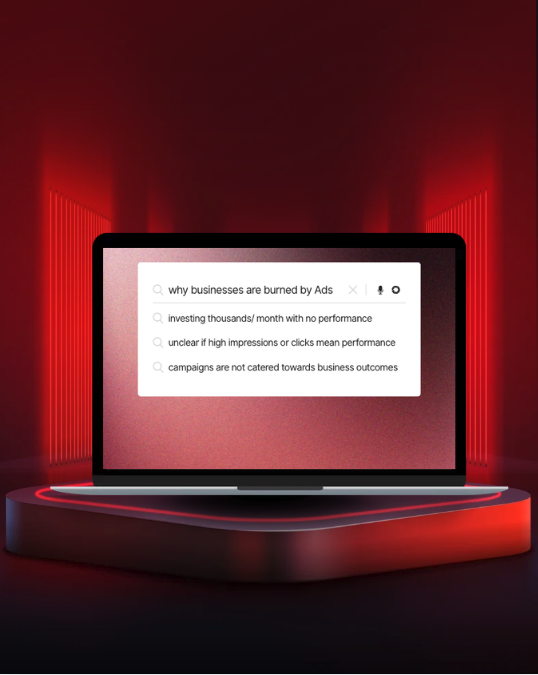
When we first meet with new clients, we often discover that they have invested hundreds or even thousands of dollars each month but are still unsure whether their campaigns are actually performing. They receive reports showing clicks, impressions and conversions, yet have little confidence that those conversions represent meaningful business opportunities.
As a result, many businesses become hesitant to continue investing in Google Ads—not because the platform doesn't work, but because they have never been given confidence that their campaigns are actually optimizing toward the business outcomes they are trying to achieve.
In our experience, this often begins long before a campaign is launched.
Many Google Ads accounts are built on conversion actions that were created years ago for different business objectives. Campaigns continue running without being cleaned up, budgets remain allocated to initiatives that are no longer relevant, and new campaigns are built using whatever conversion actions already exist within the account rather than asking whether those actions actually represent the business outcome the advertiser is trying to achieve.
At RSC Digital Marketing, we believe the success of a Google Ads campaign does not begin with creative, keywords or campaign type. Every successful campaign begins with a clean technical foundation.
Before we launch a new campaign, we analyze the existing account structure. We pause or clean up campaigns that no longer support the client's objectives, review budget allocation across the account, and determine whether the existing conversion architecture actually aligns with the goal of the campaign we are about to build. Rather than assuming the website already contains the right conversion action, we thoughtfully evaluate where that conversion occurs within the customer journey, whether it represents meaningful business intent, and whether it provides Google's bidding systems with a signal that accurately reflects the desired business outcome.
Where Most Conversion Setups Break Down
Google's recent guidance around lead generation makes it clear what the company is trying to improve. The focus is no longer simply on tracking more conversions. Google's automation is becoming increasingly dependent on understanding the customer journey and identifying the conversion point that provides the strongest signal for automated bidding.
For years, many advertisers have treated conversion tracking as something to expand rather than refine. If a platform made it possible to track another action, it was added. If a new conversion type became available, it was imported into the account. On paper, this creates a comprehensive dataset.
The reality is different.
More data does not necessarily create better campaign performance. What matters is whether the data being collected accurately represents the business objective the campaign is designed to achieve.
Campaigns are frequently optimized toward a collection of conversion actions that differ significantly in intent, value and timing. Some signals occur too early in the customer journey to predict meaningful business outcomes, while others may have little relationship to the objective of the campaign itself. As Google's automation becomes increasingly dependent on machine learning, noisy conversion setups make it much more difficult for the system to understand what a valuable customer actually looks like.

How We Applied Google's Understanding of Conversion Systems
When planning our client's June Google Ads campaign, we used Google's latest guidance as an opportunity to rethink the campaign from its foundation rather than simply launching another set of advertisements.
Instead of asking, "What can we track?" we asked a different question.
What should Google's automation actually learn from?
To answer that question, we evaluated several factors that are often overlooked during campaign setup.
We analyzed whether existing conversion signals were closely tied to meaningful business outcomes or whether they represented actions that occurred too early in the customer journey. We reviewed whether campaigns were optimizing toward multiple conversion actions carrying different levels of intent and business value, and whether the existing conversion architecture provided Google's bidding systems with precise, consistent signals capable of supporting effective automated bidding.
Rather than assuming the website already contained the correct conversion action, we evaluated whether the customer pathway itself reflected the business outcome we wanted Google to optimize toward. Where necessary, we redesigned the conversion pathway to better align both the client's objectives and Google's evolving understanding of meaningful conversion data.

Why Our Landing Page Strategy Supports Google's 2026 Direction
Google is moving closer to the systems where business outcomes actually happen, not simply where advertisements are served. By encouraging stronger connections between CRM data, offline conversions, first-party customer information and website interactions, Google's platforms are becoming better equipped to understand what a qualified customer looks like beyond the initial click or form submission.
That shift has significant implications for how landing pages should be designed.
Many businesses continue sending paid traffic to pages that generate activity but provide limited learning opportunities for Google's automation. A generic contact form or page visit may generate a conversion, but that does not necessarily tell Google's systems whether the interaction represented genuine purchase intent.
This is one of the reasons we developed our Landing Page Submission Form Design Conversion Program.
Rather than simply creating a page that encourages more submissions, we focus on creating meaningful conversion signals that align with the specific campaign objective. If the right data signal does not already exist within the client's website, we don't simply launch the advertisement and hope for the best—we create the signal first.

Why Our Approach Is Different
This is where our clients at RSC Digital Marketing truly experience the difference of working with a strategic boutique digital marketing firm.
Many businesses believe they are hiring a Google Ads specialist to improve campaign performance. In reality, campaign success often begins long before a single advertisement is launched. It begins with the technical foundation supporting the campaign.
To build a campaign that Google's automation can learn from effectively, we often find ourselves evaluating far more than keywords and advertisements. We review the Google Ads account, conversion architecture, Google Analytics configuration, landing page experience, website functionality, submission pathways and the overall customer journey before recommending where advertising dollars should be invested.
In many organizations, these responsibilities are divided across multiple specialists. A strategist develops the campaign, a Google Ads specialist builds the account, a web developer creates the landing page, a copywriter develops the content, an SEO specialist evaluates the website, and an analytics specialist configures conversion tracking. Each discipline brings valuable expertise, but campaign performance ultimately depends on how well these technical components work together.
Our philosophy is different.
Rather than treating these as separate services, we view them as one integrated system. Before launching a campaign, we ask a simple question:
Does Google's automation have the information it needs to optimize toward the business outcome our client is trying to achieve?
If the answer is no, we don't simply launch the campaign.
We first build the technical foundation required for success.
That may involve cleaning up existing campaigns, restructuring conversion tracking, redesigning a landing page, creating a dedicated submission form, implementing Google Analytics correctly, refining website content, or developing an entirely new conversion pathway that better reflects the client's business goals.
We don't simply want activity—we want meaningful activity.
We don't want Google's bidding systems learning that someone casually visited a webpage. We want Google's automation learning that someone expressed genuine interest in a specific service, completed a meaningful action, and demonstrated intent that aligns with the objective of the campaign.
If that data signal already exists, we strengthen it.
If it doesn't exist, we don't simply launch the advertisement.
We create the signal first.

A Thoughtful Approach to Data Strength
Google's increased focus on Data Strength is a positive step, but it does not remove the need for strategic decision-making.
Simplifying conversion setup does not automatically improve campaign performance. If conversion actions are poorly defined or fail to reflect the objective of the campaign, connecting them more efficiently simply allows Google's automation to learn from the wrong information faster.
For every conversion action we evaluate, we consider several important questions.
How predictive is this action of genuine business value?
How frequently does it occur?
How quickly does it happen after the customer's initial interaction?
Does it genuinely represent the outcome this campaign is trying to achieve?
Many advertisers default to whatever conversion actions already exist on a client's website. The problem is not whether those actions can be tracked. The problem is whether they provide Google's bidding systems with a meaningful signal for the campaign being built.
Selecting the right conversion signal requires matching the conversion action to the role of the campaign while ensuring that the signal is both meaningful to the business and usable for automated bidding. That level of intentional decision-making has become increasingly important as Google's automation becomes more dependent on signal quality.

What Does This Mean for Your Google Ads Campaigns?
The renewed focus on Data Strength reflects a broader shift taking place across Google Ads. Automation is becoming more intelligent, but it is also becoming more dependent on the quality of the information advertisers provide.
Many accounts still treat conversion tracking as something that is built once and left alone. As Google's bidding systems continue to evolve, conversion architecture should become an ongoing part of campaign strategy rather than a one-time technical implementation.
Businesses shouldn't judge Google Ads solely by the number of clicks or conversions reported inside the platform. They should be asking whether Google's automation is learning from the right business signals in the first place.
At RSC Digital Marketing, we don't simply launch campaigns using whatever data already exists within an account. We build the technical architecture that allows Google's automation to optimize toward meaningful business outcomes.
If the data isn't there, we don't just launch the ad.
We create the signal for it to work.
